

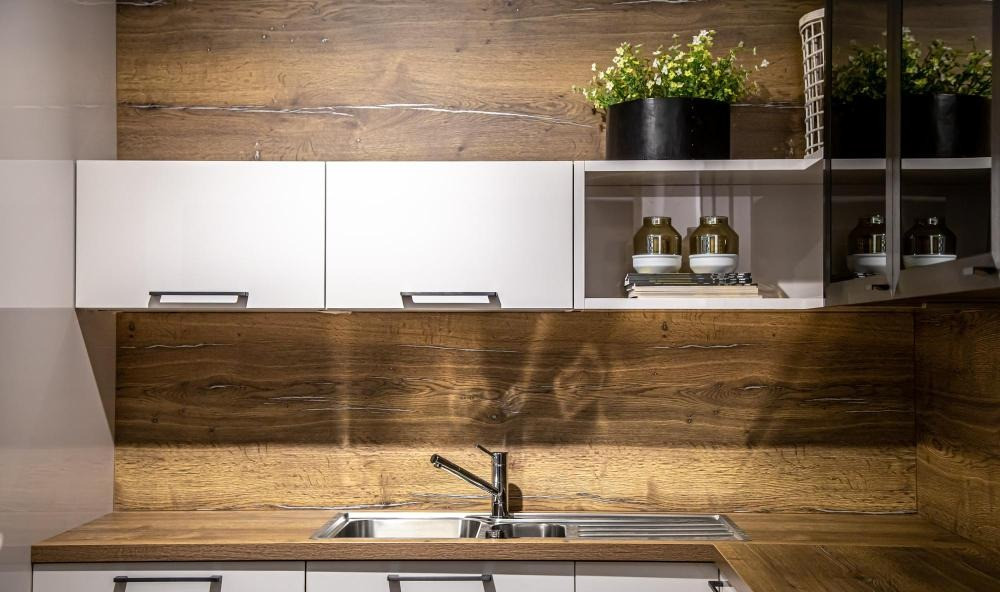
Wood costs more than veneer, laminate, wrap, or melamine because it requires thick, solid pieces of natural timber and involves more demanding, labor-intensive manufacturing and finishing processes. One piece can look quite different to another as a result of the tree’s growth conditions. Consistency in grain, shading, and color can’t always be guaranteed. Unless specifically requested, your kitchen supplier won’t match the grain from one piece to the next, and doing so involves an extra cost.
The reasons to choose wood for a renovation in Bend often outweigh these drawbacks, especially as today’s techniques and products minimize most of the usual risks. Wood brings a one-of-a-kind natural beauty, warmth, and character that few other materials can rival, and it complements a wide range of styles, from rustic to ultra-modern. Hardwood surfaces, such as oak, are strong and hard-wearing, which means they take a lot of force to dent, scratch, or break. With proper care, wood can last a century or longer, making it a long-term investment.
The biggest question running through your mind is probably: Is solid oak a timeless investment in quality and style, or has it become an outdated choice in Bend’s design landscape? Read a little further and you’ll find out.
The Case For Solid Oak In The Kitchen
Oak was one of the most popular choices for kitchens in the Bend, especially from the 17th century onward, and was widely used in country houses for beams, floors, furniture, and doors. Oak cabinets weren’t just a matter of local color, but a defining feature of domestic kitchens in the 1920s, often paired with marble worktops and simple color schemes. If installing new cabinetry isn’t in the cards for you, you can introduce solid oak into your kitchen through details like floating shelves, dining chairs, or a statement island.
Both designers and homeowners in Bend are embracing fresh, modern styles that highlight individuality while keeping their homes on-trend. Oak’s strength and durability translate into the fact that cabinets and surfaces can withstand decades of daily use without losing their integrity. Unlike in-vogue materials that may quickly feel dated, oak retains its appeal and often increases a home’s perceived value. Thanks to modern finishes and treatments, many maintenance complaints are now minimal.
You can explore affordable kitchen doors for upgrades at various showrooms, so visualize, explore, and confidently plan your dream kitchen from beginning to end. See how professionals balance workflow, safety, and efficiency, and learn to do the same. If your kitchen is getting serious heavy use, solid oak is the best choice you can make; just be sure it’s sustainably harvested. Unregulated logging destroys biodiversity, weakens the soil, and accelerates climate change. By cutting oak at the right time, its life is extended through kitchen units that last for generations.
The Case Against Solid Oak In The Kitchen
The number one problem with oak is that it’s susceptible to water damage because it’s a porous, natural material that absorbs moisture, which causes it to swell, warp, and crack. Steam, spills, and fluctuating humidity are common in the kitchen. Prolonged exposure to moisture makes wood fibers expand unevenly, so you’ll end up with bulging or distorted cabinet doors. Over time, repeated moisture cycles weaken joints, reduce strength, and compromise the durability of cabinetry.
Fan every time you cook, boil water, or run the dishwasher, and make sure it’s vented outside, not just recirculating air. A portable dehumidifier placed in the kitchen can remove moisture from the air, keeping humidity in the safe 30%-50% range. All the surfaces of the solid oak should be finished with a water-resistant sealant, such as polyurethane varnish. British oak trees naturally contain tannins, which produce black stains when they come in contact with water and metal. A good primer is required before applying varnish to block this reaction.
Alternative Analysis
Solid oak mightn’t always be the best option, and these substitutes might work just as well in your home (or even better):
- MDF: MDF strikes an excellent balance between cost, style, and durability. It’s made by breaking down hardwood or softwood into fine fibers, which are then mixed with wax and a resin binder. Then, it’s pressed under heat to create flat, smooth panels.
- Textured melamine: Textured melamine is more resistant to scratches, stains, and moisture. It consists of a raw particle board or MDF, which ensures the bulk of its strength and thickness, and resin-infused decorative paper that gives the surface a tactile feel. Textured melamine can still be vulnerable if exposed to water at the edges.
- Thermofoil: Thermofoil is recommended for budget-friendly kitchen renovations because it withstands moisture and stains, not to mention that it’s available in multiple colors and styles. A thin vinyl sheet is heated and vacuum-pressed onto MDF, wrapping the surface tightly.
Why You Shouldn’t Skip Solid Oak
If you want a long-lasting, premium kitchen that blends traditional and modern elements, creating a harmonious balance, you should choose kitchen doors in oak design. Because oak cabinets naturally dominate a kitchen’s aesthetic, it helps to introduce other focal points. A remarkable backsplash or an eye‑catching range hood can shift the emphasis, while a patterned rug or runner offers a cost‑effective way to layer in visual interest. The orange hues in oak cabinetry can make your kitchen feel like it’s stuck in the past, so introduce refreshing tones of blue or green.
Personalize your Bend kitchen with cherished accents like decorative plates or colorful glass vases. You can complement the look with pieces that reflect your style or palette, such as ceramic planters, patterned dish towels, or even statement appliances. Last but certainly not least, tie it all together with lighting fixtures that suit the room’s architecture for a cohesive finish. Kitchen lights should be a mix of warm and cool lighting.
If you want to bring new life into your kitchen, try two-toned cabinets. More exactly, paint the base in a different color to break up the wood and make the cooking space more interesting. Not only does this make the kitchen look bigger, but it’s also a popular trend in home design. Try a warm white that enhances oak’s natural golden or yellow undertones. You’ll be amazed by the result.